
Ay Ay, AI!
What to do with AI in HR?!

Hiii…
Whoever said AI in HR isn't a big deal has clearly been living under a rock.
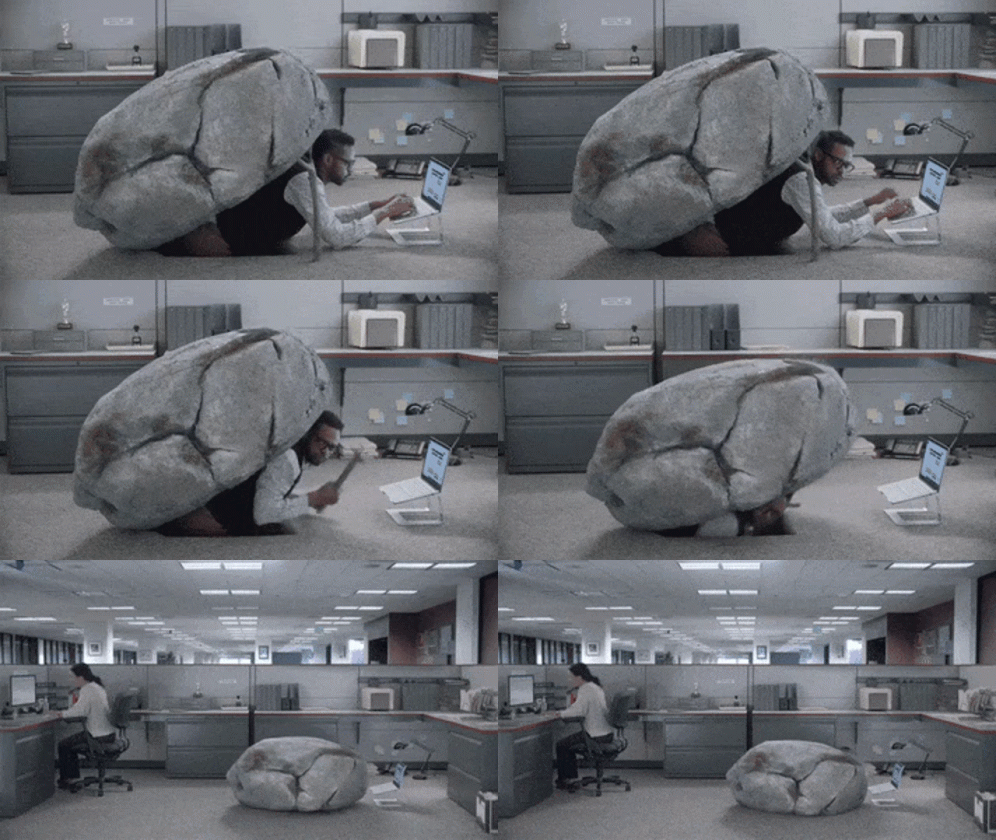
That said, they are probably right when they say that most HR professionals only now are starting to embrace AI tools like ChatGPT, Gamma, and other tools that turn your photos into professional headshots. Sorry, photographers!
At this rate, we might want to start advocating for Universal Basic Income because…
AI will come for our jobs.
And this will be sooner than you think.
While we wait for it to happen, though…
Here are some HR myths about AI that I want to debunk in today’s letter.
Let’s go!
1. Can AI really replace human judgment?
AI isn't here to steal the spotlight from us humans.
It is here to be faster, better, smarter, stronger.
For now, think of it as our sidekick, helping us make smarter decisions and process information efficiently. Imagine having a personal assistant that can sift through mountains of data, uncover hidden patterns, and offer insights that make Agatha Christie look like a rookie.
Let AI handle the heavy lifting while we bring the human touch.
This means leveraging it for data processing but keeping the judgment of the human mind.
This likely will change, but it will not happen tomorrow.
Can AI really understand human emotions?
The million-dollar question!

While AI isn't a mind reader (yet), it's getting pretty close.
Picture having a digital assistant that analyzes employee sentiment detects signs of burnout, and predicts when someone is ready to spread their wings.
Let me tell you, there are already tools like this, diving into Slack to predict burnout! Scary, but on the other hand…
AI-powered tools give us valuable insights into employee well-being, helping us create an empathetic work environment.
It's like having a pocket-sized therapist for your entire team!
Are AI hiring algorithms biased?
Ah, the infamous boogeyman of AI in HR.
The true answer is yes.

Without control, it will be, at the very least, sexist and racist.
But fear not, my friends!
AI algorithms can be trained to eliminate bias and champion diversity and inclusion. We can teach AI to focus on skills, qualifications, and potential rather than perpetuating biases based on sex, race, and socioeconomic status (and other characteristics). AI can force positive change and build a workforce that reflects our wonderfully diverse world.
But it is limited in the inputs it receives.
So, is AI biased, or is the society biased?
Can AI really predict the future?
Hold onto your hats, folks, because AI's predictive powers are mind-boggling.
It can analyze historical data, spot trends, and forecast future workforce needs. Imagine having a crystal ball that tells you which employees are at risk of leaving or which roles will be in high demand.
Armed with this knowledge, we can proactively address challenges and steer our companies toward success.
So, my friends, are you ready to embark on this AI-fueled HR adventure?
Embrace AI as your ally and watch your HR processes become faster, smarter, and more efficient than ever before.
It really is a tool, and you can use your tool for good or for evil. The choice is yours.
And when in doubt, gather some like-minded people and ask them how they use AI today.
You might be surprised about the applications that already exist. I know I was!
Are you with me?
K
Learn People Analytics in a Practical Way!

👉 Check out my new Practical People Analytics Course that covers the most common questions I get from HR professionals:
What metrics should I use?
How do I measure engagement?
How do I make sure there is no bias in my comp?
What is the best way to measure performance?
How can I use advanced analytics to drive action?
Which means… you will have everything you need to build your data-driven HR function.