
Data Story Alchemy
The 3-Element Problem

Hi, Friends,
Today, we will discuss one of the key elements of People Analytics—yes, you guessed it, Data Storytelling.
But before we do, here is a quick update!
Danielle Bushen, Nabil Dewsi, and yours truly just launched the Toronto People Analytics Group! It's completely free—sign up here. This was from the kick from the well-known People Analytics celebrity, Richard Rosenow.
And guess what?
The group was much needed as so many people are already signing up!
We also secured our initial meeting space at Deloitte and hope to host regular meet-ups for people in People Analytics or those who want to enter this field.
Again—sign up by clicking the image below:

Okay, shall we talk about the 3 key elements of Storytelling?
Explain
Enlighten
Engage
Let's go!
Why are we talking about this?
Well...
Many of us face this situation:
We've come up with interesting questions
We spent months collecting, aggregating, and cleaning the data
We are now ready to see the results of our efforts—action
And to see action, we must communicate the data effectively to our leadership team.
This is where the issue emerges:
Endless decks
Convoluted charts and clunky tables
Revisions, revisions, revisions based on things that don't matter
Data Storytelling is a challenge for People Analytics and HR alike. Indeed, it is among the most commonly asked questions in my Slack communities.
So, how should we solve the challenge?
Well, the good thing is that you are not alone.
There is this brilliant guy Brent Dykes in data analytics who wrote the book "Effective Data Storytelling." This book is pretty much all you need to get good at Data Storytelling.
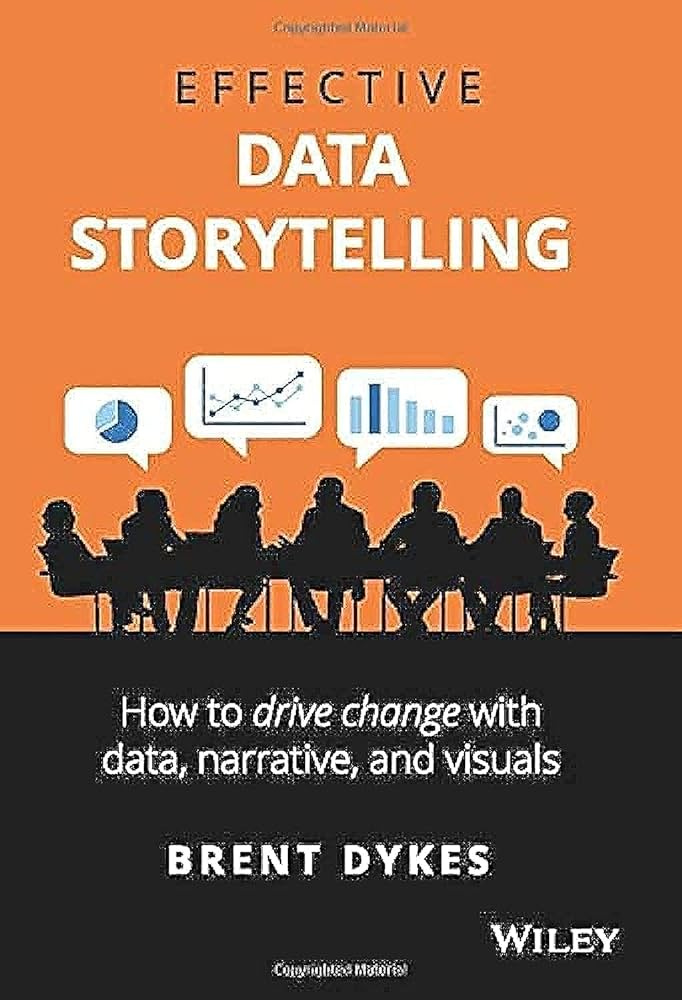
Today, I will discuss the initial framework he introduces in the book. I recommend it to anyone interested in taking their Data Storytelling to the next level. (And, no, I do not get a commission from this.)
There are 3 elements to your data story:
They are Data, Narrative, and Visuals.
Data is fundamental to any data story told, as without data, it is simply fiction. Narrative is the second element focused on interpreting data within the context. Finally, the visual element illustrates the data and narrative for easy and effective communication.
These elements come together into this thing:
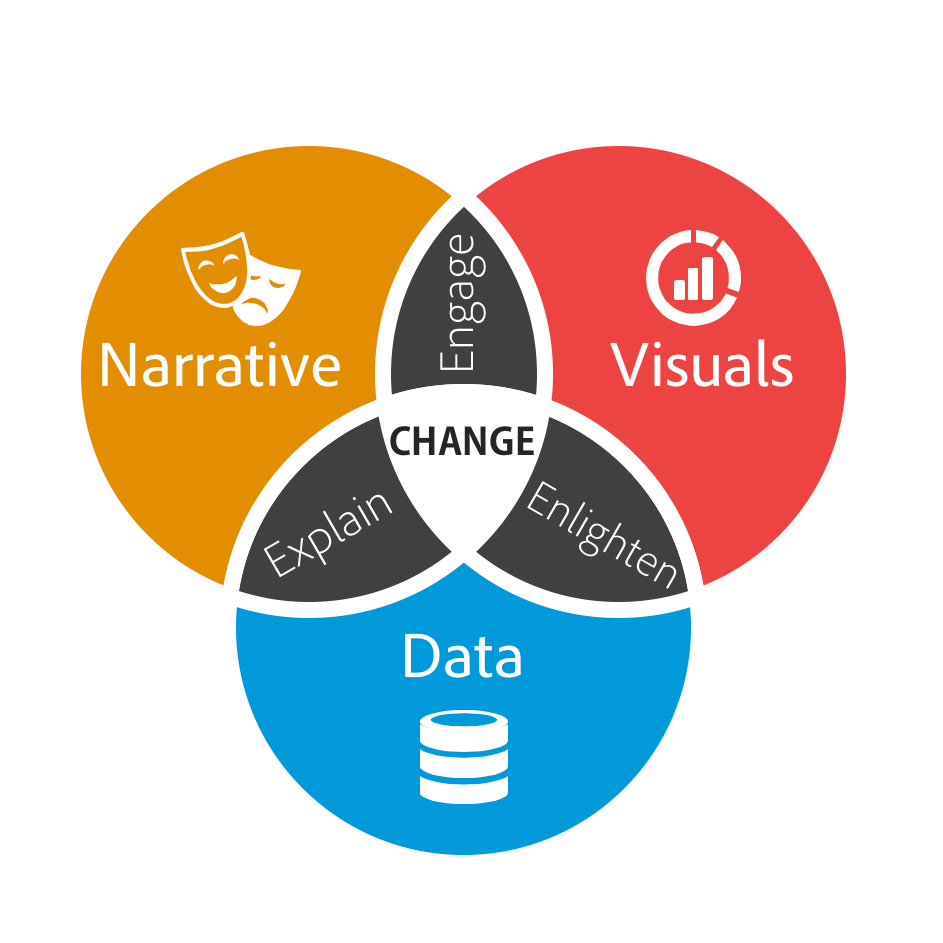
And, as you can see, you are doing different things depending on where you are.
Data + Narrative = Explain
When you have Data and share it via a Narrative, you rarely explain what is going on within the data. This is when you share why your insights matter and why you should pay attention to them.
How to apply it in your work:
Use simple vocabulary to explain what is happening
Provide an illustrative example that people can relate to
Appeal to the sensory experience of people if you can
Narrative + Visuals = Engage
When you share the story and visuals, you are really engaging with people's sensory and emotional centers. When I think about this intersection, I am really thinking about a presentation at a conference where we tell the story of what happened using stories and data.
How to apply this in action:
Create simple images supporting the story
Capture their attention with sticky, interesting data points
Engage in conversation; a two-way street
Data + Visuals = Enlighten
The final combo is focused on enlightenment or shining light on the insight. You probably have heard the expression: a picture is worth a thousand words.
And that is 100% true!
How to apply it in your work:
Generate a chart when you can
Use best practices of visual organization
Highlight where you want the audience to look
Together, these elements come to the ultimate conclusion: Change.
When people understand the data, see its implications, and engage with it in a friendly and constructive way, they want to use it to drive the best possible outcome—change.
So, next time you tell a data story, look back at the elements you use and combine them to drive change.
Big thanks to Brent Dykes for such a great book!
Cheers,
K
Whenever you're ready, there are 2 ways I can help you:
#1
If you're still looking to get started in People Analytics, I recommend starting with my affordable course:
Practical People Analytics: Build data-driven HR programs to 10x your professional effectiveness, business impact, and career. This comprehensive course will teach you everything from building an HR dashboard for business results to driving growth through more advanced analytics (i.e., regression). Join your peers today!

#2
If you are looking for support in your human capital programs, such as engagement, retention, and compensation & benefits, and want to take a more data-driven approach, contact me at Tskhay & Associates for consulting services. Or simply reply to this email!