
Leadership 360
Your How-to Guide to Designing and Deploying this Magical Assessment

Hi Friends,
Oh em gee! This week has kicked off so fast. I feel like everyone is back and recharged!
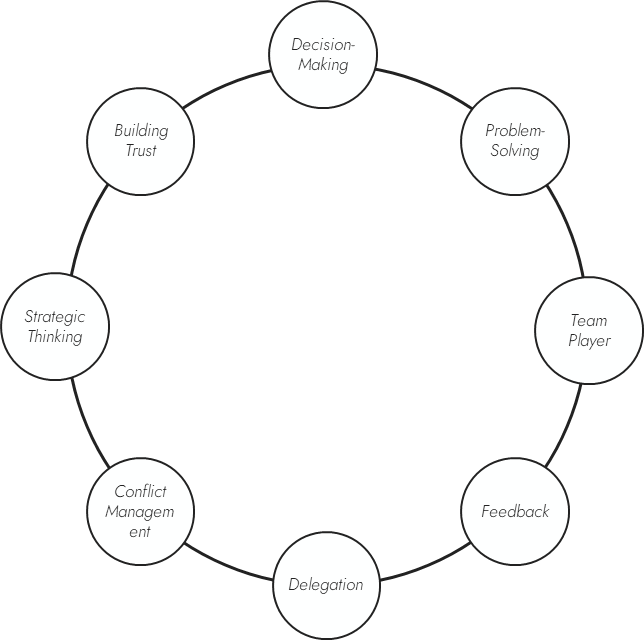
This week, I talked with a prospective client about the Soft Skills Assessment I and The Soft Skills Group have recently developed to help HR Leaders prioritize how to deploy the learning budgets in organizations. The client was excited about it as it is fast, targeted, and affordable. So, win win win.
Check out the high-level framework here:
As a part of the conversation, we also discussed Leadership 360s and how to deploy them successfully within organizations.
So, I figured, let's talk 360!
Yes, the assessment you deploy to leaders to identify your leadership strengths and opportunities and how to deploy your leaders best.
In this newsletter, we will cover:
What is the use of a 360 assessment
How to quickly set it up
What to do after the analysis
Let's goooo! 🚀
1. What is the use of a 360?
That's my favorite question in people analytics, HR, and life.
Why do we care to do what we do?

After all, when dealing with each of the three subjects, we deal with enormous complexity, high cost in terms of time and money, and largely open-ended results.
So, here are the three key benefits of a good 360:
You will quantify where your leaders are at in terms of their capability. This means learning how good each person on the team is at being a leader, as seen by their peers. How else can you measure leadership? You can use numbers like Revenue and Number of Leads generated, but that is not leadership. It's the outcomes of leadership.
You will learn about your gaps. Say your organization is looking to partner with several external resources and needs leaders to influence these partners into win-win contracts effectively. Imagine you found that only 3 of your 200 leaders are good at this. I can hear the alarms ringing. Wheeeu! Wheeeu! Wheeeu! Time to make some changes. Conversely, imagine you see that your leaders are great at driving results within the organization--how can you double down on this? A good 360 will allow you to answer these questions.
You will develop your leaders. There is no point in running 360 if you are not going to action it. But this does not only mean re-deployment. It also means coaching and development for your leaders on an ongoing basis. 360 allows you to leverage your staff as coaches, providing feedback to each other. Then, you can hire coaches who will help leaders improve.
It sounds like a worthwhile investment. If your leaders are deployed well and developed, they will make an impact.
So, how do we run it?
Running 360 is simple.

Sure, it takes some time and coordination, but it is simple. It's a survey, after all.
But... You need a few things before you get started:
Have a solid leadership framework: What does it mean to be a leader at your organization? What capabilities do I need to have to be successful here? These are the questions your framework needs to answer. So, start with building out your leadership framework.
Assessment tool: You must have 360 software to run the assessment. It can be a performance software you already have, the one you purchase from a consulting firm, or even the one you set up within a provider like Qualtrics.
Psychological safety: Your leaders and assessors must feel safe providing feedback. It's about improvement, not putting people down. If you don't have leaders trusting each other, you have a bigger problem--fix your culture before diving into a 360.
Assuming you have these all... Here is how I would approach setting up a 360:
Start with the development of your 360 questionnaire using your framework. You can either spend time doing it yourself or hire a consultant with the tools and skills. Typically, you would map the statements to each of your leadership capabilities to ensure you have a question bank to measure leadership.
Level the assessment. Leadership looks different for different levels of leaders. A front-line manager's influence differs from a C-Suite leader's. Make sure to calibrate your questions appropriately.
Get executive approval. Your senior team needs to be on your side for the process. They will be the first to go through the assessment to reap the benefits and cascade them to their groups. Such is the power of feedback.
Scale. Select who will go through the assessment and at what point in time. In a large organization, deploying an assessment can cost millions fo dollars in time. And while this time is spent well, investing it all at once is risky. Start with the most senior group, then VPs, then Directors, and so on.
Deploy communications. Let people know the assessments are coming, what to expect, and how to complete them. Ensure people know what is expected of them and why before deploying anything.
Deploy the assessment. Send the assessment to your staff or have a consultant do it. This process will likely take 2-3 weeks to complete. You can just sit back, relax, and monitor the process.
Results. This phase is where people analytics comes in. You will have your leaders receive their individual reports at the specific level. In the aggregate, you might want to see how the leadership team scores holistically and where the areas of improvement are. It's a good practice to review aggregated team results with the team to trigger the reflection.
Phew!
One more section!
What to do after the analysis?
Move to organizational design planning, looking into your bench strength from a leadership standpoint, seeing where to fill the gaps and how.
This does not mean moving people out (but that's an option too).
But it can mean re-deployment to different areas, supplementation with other leaders to balance the skill gaps, and deployment of strengths to educate other parts of the organization.
Next, make sure to establish a coaching program for individuals. 360s are so personal that they benefit incredibly from a good coach working with a leader on the results and helping them improve consistently, keeping them accountable. Your investment into 360 will not go to waste if the leader grows; a personalized coaching approach will do that.
Finally, organization-wide workshops for common gaps. This way, you can deploy the same learning to several people at once. Not bad, but it pales next to personalized learning.
Easy!
If you have questions about 360s, let me know.
Till next week!
K
Whenever you're ready, there are 2 ways I can help you:
#1
If you're still looking to get started in People Analytics, I recommend starting with my affordable course:
Practical People Analytics: Build data-driven HR programs to 10x your professional effectiveness, business impact, and career. This comprehensive course will teach you everything from building an HR dashboard for business results to driving growth through more advanced analytics (i.e., regression). Join your peers today!

#2
If you are looking for support in your human capital programs, such as engagement, retention, and compensation & benefits, and want to take a more data-driven approach, contact me at Tskhay & Associates for consulting services. Or simply reply to this email!